Conference planning checklist
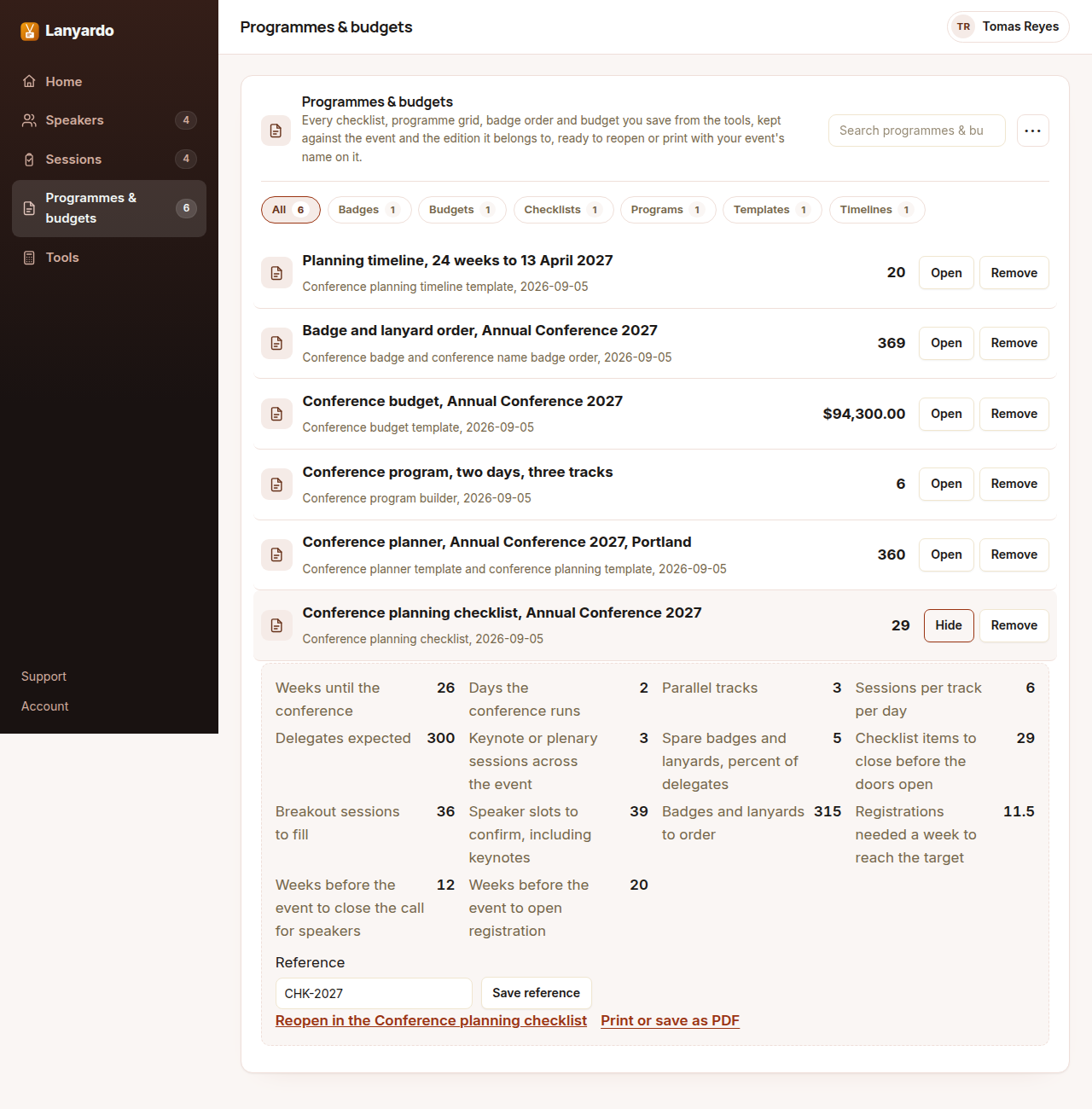
- Checklist items to close before the doors open
- 29
- Breakout sessions to fill
- 36
- Speaker slots to confirm, including keynotes
- 39
- Badges and lanyards to order
- 315
Every figure on this page is worked out from the inputs you enter, by the method stated below it. Lanyardo publishes no venue directory, no speaker list and no industry cost per head: the defaults are a worked example to replace with your own numbers, and the delegate count is always yours.
The figures above start from a worked example (29). Change any input and the answer updates as you type.
Download the Conference planning checklist worked example (CSV)
A conference planning checklist is only useful when it is sized to the event, and most are a list of everything anyone has ever done for any event. This one works from what you type: the weeks until the doors open, the days and tracks, the sessions per track and the delegates expected. It prints the number of items to close, the speaker slots to confirm, the badges and lanyards to order with a spare, the registrations needed a week to hit the target, and the weeks before the event to close the call for speakers and open registration, because a checklist without dates is a wish list.
The count of items comes from the shape of the event
Fourteen items are the same for every conference: venue, insurance, AV, catering, registration, website, badges, signage, staffing, accessibility, speaker contracts, sponsor contracts, run sheet and the debrief. Then one item per track per day for the room and its chair, one per keynote, and six for the day itself. The worksheet counts them so the list is the length the event actually is, and Pro turns each into a task with an owner and a date.
The milestones are shares of the runway, not fixed weeks
Registration opens with about three quarters of the runway to go and the call for speakers closes near the halfway point, on a 26 week plan. The worksheet scales those shares to your runway, so a twelve week event opens registration at nine weeks out rather than at a date copied from a longer plan. Shorten the runway and every milestone compresses in proportion, which is honest about what a short runway costs.
The registration pace is the number to watch
Delegates divided by weeks is the average bookings a week the target needs, and it is the figure that tells you in week eight whether the event is on course. Registrations do not arrive evenly, they cluster at early bird close and in the last fortnight, so the weekly figure is a floor to compare against rather than a forecast. Pro keeps the weekly count against it.
Conference planning checklist: common questions
Why does the badge count include a spare?
Because someone always walks up, someone's name is spelt wrong, and someone leaves theirs in the hotel. Five percent spare on a few hundred delegates is a handful of badges and lanyards, and the day you do not have them is the day you need them. Set the spare to your own experience.
Can I use this for a one day event with one track?
Yes. Set days and tracks to one and the counts shrink to match; the fourteen fixed items and the keynotes remain, because a one day event still needs a venue, insurance and a run sheet.
Does this save the checklist anywhere?
Not on its own. The worksheet computes in your browser and sends nothing anywhere. Lanyardo Pro turns the items into tasks with owners and dates against the event, and keeps last edition's for the next.